
Need SR-22 insurance assistance?
 CALL our licensed Agents
(Mon-Fri, 8am – 5pm PST) for personalized guidance CALL our licensed Agents
(Mon-Fri, 8am – 5pm PST) for personalized guidance |
An SR-22 in Texas isn’t insurance—it’s a certificate your insurer files with the DPS proving you maintain state-required liability coverage. You’ll need it after violations like DWI, driving uninsured, or license suspension, and you must keep it active for two years without lapses. The filing costs $15-$50, though your premiums may increase 50-300% due to the underlying violation. You can switch insurers during this period and explore non-owner policies if you don’t own a vehicle. This guide answers your most pressing questions about Texas SR-22 requirements.
Key Takeaways
- SR-22 is a certificate filed by insurers proving state-required liability coverage, not an insurance policy itself.
- Required after serious violations like DWI, driving uninsured, or multiple traffic offenses within a short period.
- Continuous coverage must be maintained for two years; any lapse restarts the compliance period and risks license suspension.
- Filing fees range from $15 to $50, but premiums typically increase 50% to 300% due to underlying violations.
- You can switch insurance providers during the SR-22 period if the new insurer files before the old policy lapses.
What Exactly Is an SR-22 Certificate in Texas?

An SR-22 certificate in Texas isn’t actually insurance—it’s a document your insurance company files with the Texas Department of Public Safety (DPS) to prove you’re carrying the state’s minimum liability coverage.
Think of it as a guarantee from your insurer that you’ll maintain continuous coverage for a specified period, typically three years.
An SR-22 is your insurer’s promise to the state that you’ll keep your coverage active for three years.
The DPS requires this filing when you’ve committed serious traffic violations like DWI, driving without insurance, or accumulating excessive points on your driving record.
Your insurance provider electronically submits the SR-22 directly to the DPS. If you cancel your policy or let it lapse, your insurer must notify the DPS immediately, which can result in license suspension.
You’re responsible for maintaining both the underlying insurance policy and the active SR-22 filing.
Who Is Required to Obtain an SR-22 in Texas?
Understanding what an SR-22 is naturally leads to the question of who must file one. Texas requires you to obtain an SR-22 certificate if you’ve committed specific violations that classify you as a high-risk driver.
The Texas Department of Public Safety mandates SR-22 filing for:
- DWI or DUI convictions – You’ll need continuous SR-22 coverage for two years following license reinstatement.
- Driving without insurance – Being caught operating a vehicle uninsured triggers SR-22 requirements.
- Multiple traffic violations – Accumulating excessive points or serious offenses within a short timeframe.
You’re also required to maintain SR-22 status if you’ve had your license suspended or revoked for other driving-related violations.
Your insurance company files the SR-22 directly with the state on your behalf.
How Do I Get an SR-22 Certificate Filed?

The process of obtaining an SR-22 in Texas is straightforward once you understand the steps involved.
First, you’ll need to purchase an auto insurance policy that meets Texas’s minimum liability requirements.
Once you’ve secured coverage, contact your insurance provider and request SR-22 filing. Your insurer will electronically submit the SR-22 certificate to the Texas Department of Public Safety on your behalf, typically within 24 to 48 hours.
You’ll receive a copy for your records. There’s usually a filing fee ranging from $15 to $50, depending on your insurance company.
It’s critical that you maintain continuous coverage throughout the required SR-22 period, as any lapse will restart your filing requirement and extend your compliance timeline.
How Much Does SR-22 Insurance Cost in Texas?
SR-22 insurance costs in Texas vary greatly based on your driving history, the violation that triggered the requirement, and your chosen insurance provider. The SR-22 filing fee itself typically ranges from $15 to $50, but your insurance premiums will increase considerably.
While the SR-22 filing fee is modest at $15-50, expect your overall insurance premiums to rise substantially based on your violation.
Key factors affecting your Texas SR-22 insurance costs:
- Violation severity – DWI convictions result in higher premiums than minor traffic offenses.
- Prior insurance history – Lapses in coverage or previous cancellations increase rates significantly.
- Coverage limits selected – Texas minimum liability requirements cost less than extensive policies.
You’ll likely see premium increases of 50% to 300% compared to standard rates.
Shopping among multiple Texas insurers who file SR-22s is essential, as rates differ dramatically between companies for high-risk drivers.
What Is the Minimum Coverage Required for an SR-22?
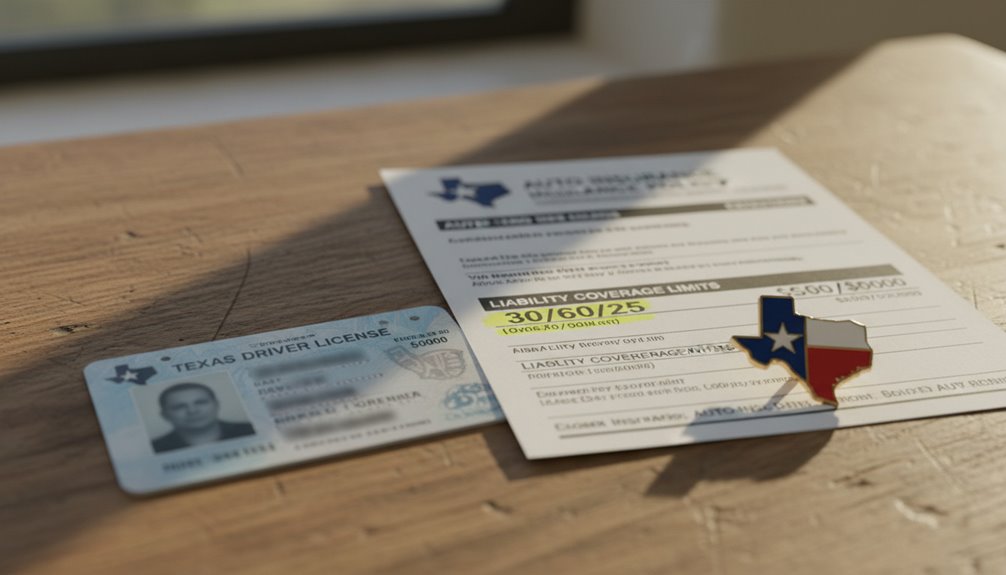
You can’t obtain an SR-22 with less than these minimums. Your insurance company won’t file the certificate if your policy doesn’t meet state requirements.
While you’re allowed to purchase higher coverage limits, Texas won’t accept an SR-22 filing attached to a policy that falls below 30/60/25.
These aren’t optional guidelines—they’re strict legal requirements. If your coverage lapses or drops below minimums during your SR-22 period, your insurer must notify the Texas Department of Public Safety immediately.
How Long Do I Need to Maintain SR-22 Coverage?
Most Texas drivers must maintain SR-22 coverage for two consecutive years from the date of their violation or suspension.
The Texas Department of Public Safety monitors your compliance throughout this period, and any lapse in coverage restarts the clock. You’ll need to maintain continuous auto insurance that meets state minimum requirements while your SR-22 filing remains active.
Your SR-22 period can be extended if:
- You allow your insurance policy to lapse, even for one day
- You’re convicted of another traffic violation during the filing period
- You move out of state without properly transferring your SR-22 requirements
Once you’ve successfully completed the required timeframe, your insurance company will notify the DPS, and you’re no longer obligated to carry SR-22 certification.
What Happens If My SR-22 Policy Lapses or Gets Cancelled?

If your insurance company cancels your policy or you let it lapse, they’re legally required to notify the Texas DPS immediately.
Once notified, the DPS will suspend your driving privileges until you reinstate proper coverage. You’ll receive a suspension notice detailing the actions you must take to restore your license.
To reinstate your driving privileges, you’ll need to obtain new SR-22 coverage and pay reinstatement fees to the DPS. These fees are in addition to what you’ll pay for your new insurance policy.
The suspension remains on your driving record, potentially leading to higher insurance rates and extended SR-22 filing requirements.
Maintaining continuous coverage is essential. Set up automatic payments and monitor your policy status regularly to avoid lapses.
Can I Remove an SR-22 From My Record Early?
Unfortunately, Texas law doesn’t allow drivers to remove an SR-22 requirement from their record before the mandated period expires. You must maintain continuous coverage for the entire duration specified by the Texas Department of Public Safety, typically two years.
There’s no legal mechanism to shorten this timeframe, regardless of your driving improvements.
To successfully complete your SR-22 requirement, you must:
- Maintain continuous insurance coverage without any lapses or cancellations
- Keep your SR-22 filing active for the complete mandatory period
- Guarantee your insurance company doesn’t cancel your policy during this time
Once you’ve fulfilled the entire requirement period with no interruptions, the SR-22 will automatically be removed from your driving record.
Any lapse restarts the clock entirely.
Do All Insurance Companies Offer SR-22 Filing?

Not every insurance company in Texas provides SR-22 filing services. Many major carriers don’t offer this service because they prefer to avoid high-risk drivers.
You’ll need to contact insurance companies directly to confirm they file SR-22 forms with the Texas Department of Public Safety.
Specialized high-risk insurers typically handle SR-22 filings most frequently. These companies focus specifically on drivers who need proof of financial responsibility.
If your current insurer doesn’t offer SR-22 filing, you’ll need to switch providers.
Before purchasing a policy, verify the company is authorized to conduct business in Texas and can electronically file SR-22 forms with the state.
Shopping around among multiple insurers helps you find competitive rates, as prices vary considerably between companies offering SR-22 services.
What’s the Difference Between SR-22 and Regular Auto Insurance?
SR-22 isn’t a type of insurance policy—it’s a certificate of financial responsibility that proves you’re carrying the minimum liability coverage required by Texas law.
Regular auto insurance protects you financially after accidents, while SR-22 serves as proof that high-risk drivers maintain continuous coverage.
The key differences include:
- Filing requirement: Your insurer must electronically file your SR-22 with the Texas Department of Public Safety, creating a monitoring system for your coverage status.
- Cost impact: You’ll pay filing fees ($25-$50) plus considerably higher premiums due to your high-risk classification.
- Cancellation consequences: If your policy lapses, your insurer immediately notifies Texas DPS, triggering license suspension.
You’re required to maintain SR-22 for the state-mandated period, typically two years, without any coverage gaps.
Can I Get an SR-22 If I Don’t Own a Vehicle?
Yes, Texas law allows you to obtain SR-22 coverage even without owning a vehicle through what’s called a non-owner SR-22 insurance policy.
This coverage is specifically designed for drivers who don’t have regular access to a car but still need to maintain their driving privileges in Texas.
A non-owner SR-22 policy provides liability coverage when you’re driving borrowed or rented vehicles. It won’t cover vehicles you own, lease, or regularly use.
This option is particularly useful if you’re fulfilling Texas Department of Public Safety requirements after a license suspension or revocation.
The policy typically costs less than standard SR-22 insurance since it doesn’t cover a specific vehicle.
You’ll still receive the same SR-22 certificate that gets filed with the state, demonstrating your financial responsibility compliance.
Will an SR-22 Requirement Affect My Driving Record?
Understanding your SR-22 obligations goes beyond just obtaining the certificate—you’ll want to know how it impacts your overall driving history.
The SR-22 itself doesn’t directly affect your driving record. It’s simply a certificate proving you maintain the state-required liability insurance. However, the violation that triggered your SR-22 requirement—such as a DWI, driving without insurance, or excessive traffic violations—remains on your Texas driving record.
An SR-22 certificate doesn’t harm your driving record—the violation that required it does.
Your SR-22 filing period typically involves:
- Maintaining continuous coverage for three years from your violation date
- Avoiding any lapses in insurance, which restart your filing period
- Keeping a clean record to prevent additional penalties or license suspension
Insurance companies access your driving record when setting premiums, meaning the underlying violation impacts your rates more than the SR-22 filing itself.
Can I Switch Insurance Companies While Under SR-22 Requirements?
You’re not locked into your current insurance provider just because you need an SR-22 certificate in Texas. You can switch carriers at any time during your SR-22 filing period.
However, there’s an important consideration: your previous insurer must notify the Texas Department of Public Safety when your policy ends, which triggers an SR-22 cancellation notice.
Your new insurance company needs to file their SR-22 form before your old policy lapses to avoid coverage gaps. Even one day without active SR-22 coverage can restart your entire filing period and potentially suspend your driving privileges.
When comparing providers, make certain they’re authorized to file SR-22 forms in Texas and can process the documentation quickly to maintain continuous compliance.
What Happens After My SR-22 Period Ends?
Once your SR-22 filing period expires in Texas—typically two years from the date of conviction—you’ll receive a release notice from the Department of Public Safety confirming you’ve met the state’s monitoring requirements.
At this point, you’re no longer mandated to maintain SR-22 certification.
However, you should take these important steps:
- Verify your release with Texas DPS to guarantee they’ve properly closed your SR-22 requirement and updated your driving record.
- Contact your insurance provider to remove the SR-22 filing from your policy, which may reduce your premiums.
- Maintain continuous coverage because any future violations could trigger more severe penalties, including extended SR-22 periods.
You’ll still need valid auto insurance to drive legally in Texas.
How Can I Find Affordable SR-22 Insurance in Texas?
Finding affordable SR-22 insurance in Texas requires a strategic approach, as rates can vary greatly between providers—sometimes by hundreds of dollars annually.
Start by comparing quotes from multiple insurance companies that specialize in high-risk coverage. You’ll want to ask about available discounts, such as bundling policies, maintaining a clean driving record going forward, or completing a defensive driving course approved by the Texas Department of Licensing and Regulation.
Consider increasing your deductibles to lower premiums, but make certain you can afford the out-of-pocket costs if you file a claim.
Some insurers offer payment plans that make monthly costs more manageable. Additionally, improving your credit score can positively impact your rates in Texas, where insurers often consider credit history when calculating premiums.
Conclusion
Contrary to popular belief, an SR-22 isn’t actually insurance—it’s proof you’re carrying the state-mandated coverage Texas requires. You’ll navigate this requirement more successfully when you understand it’s temporary and manageable. While you can’t avoid the filing if you’ve been ordered to maintain one, you can minimize costs by comparing providers and maintaining a clean driving record moving forward. Your SR-22 period will end, and you’ll regain full driving privileges. Don’t delay getting compliant—Texas law requires immediate action.
Related Posts:


| Need SR-22 insurance assistance?
CALL our licensed Agents
(Mon-Fri, 8am – 5pm PST) for personalized guidance |